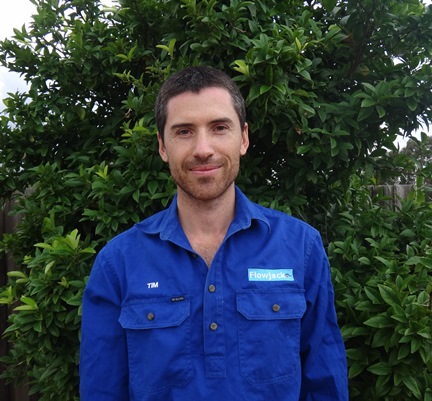
 Flowjack was established in 2008 by Timothy Stewart.
Tim grew up helping out on his father’s cattle farm near the Grampians in Victoria, where he developed a strong interest in machinery and how it works. While he enjoyed all aspects of farm life, it was the practical challenges of maintaining and improving equipment that shaped his thinking.
He later pursued an interest in aviation, earning his Commercial Pilot Licence while supporting himself through rural work including fencing, roustabouting, crutching and shearing.
In March 2007, Tim began working as a pilot on Barkly Downs Station near Mount Isa. During this time, and through visits to various cattle stations, he observed that much of the stock watering equipment in use lacked durability and thoughtful design. Recognising an opportunity for improvement, he decided to establish his own business.
He purchased a property on the outskirts of Charters Towers and built a shed. Eventually he did his first sales trip of about 4500 km with a bunch of stainless steel floats strapped down in the back of the Ute. It was a lot of travelling for just one niche product in the product range but it was a start.
With each trip, the product range expanded as Tim gathered feedback from customers and refined his designs to better meet the demands of real-world conditions.
The Development of the Flexible Float Arm
The idea for the flexible float arm came from observing frequent failures in traditional float arms, particularly on larger 3-inch and 4-inch float valves used on cattle stations. Many were bent or broken under pressure.
Rather than simply increasing strength, Tim recognised that excessive rigidity could transfer stress elsewhere and cause further damage. His solution was to design a flexible float arm that could absorb impact without failing, improving reliability in demanding environments.
Further discussions with customers confirmed there was also strong demand for flexible float arms suited to smaller valves. This was reinforced by firsthand experience on his family’s property, where stock damage to float arms was an ongoing issue.
This practical, field-driven approach continues to guide Flowjack’s product development today.